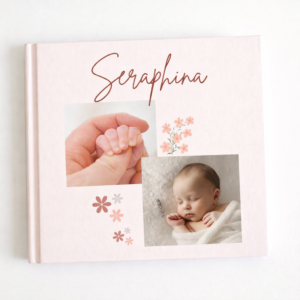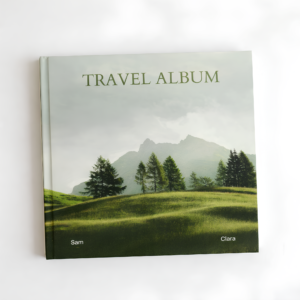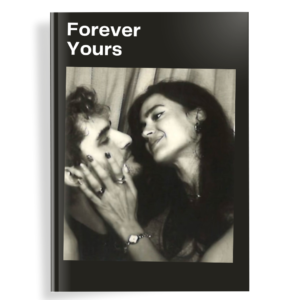
Forty is a big one — old enough to look back on a real body of memories, young enough that the story is still unfolding. If you’re searching for 40th birthday photo book ideas, you’re probably looking for something more meaningful than a stack of loose prints, but you don’t need it to feel as heavy as a 50th or 60th retrospective. This guide covers layout ideas, aesthetic themes, and practical page planning to help you build a birthday photo book that feels celebratory, not just nostalgic.
Then vs. Now: The Core Concept for a 40th
The single most effective format for a 40th birthday photo book is the “then and now” pairing — a childhood or 20s-era photo placed directly beside a recent one. It’s simple to execute and consistently the most-loved page in these books because it visually captures how much has changed (and how much hasn’t).
Ways to use this format:
- Same pose or setting, decades apart
- Childhood photo next to a photo with their own kids now
- First job photo next to their current career milestone
Milestone Captions, Decade by Decade
Rather than a strict chronological album, organize the book into four loose sections — 0–10, 10s and 20s, 30s, and “the last few years” — with a short caption under each section calling out a defining milestone: first best friend, first heartbreak, first apartment, becoming a parent. This keeps the pacing tight without needing a photo for every single year.
Candid Shots vs. Posed Portraits — Use Both, Intentionally
A common mistake is filling the book with only posed portraits, which can start to feel stiff after a few pages. Instead, alternate:
- Posed portraits for milestone events (graduations, weddings, big birthdays)
- Candid shots for everyday life — parties, holidays, inside jokes with friends
This mix keeps the pacing lively and mirrors how a real magazine spread balances editorial shots with lifestyle photography.
Aesthetic Themes to Consider
The visual style of the book matters as much as the photo selection. A few themes that work particularly well for a 40th birthday:
- Minimalist — clean white space, one or two photos per page, simple serif captions. Feels sophisticated and timeless.
- Retro Polaroid — instant-camera-style frames, slightly tilted photos, handwritten-style captions. Great for a nostalgic, playful tone.
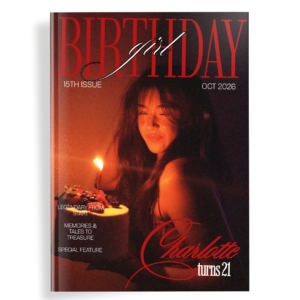
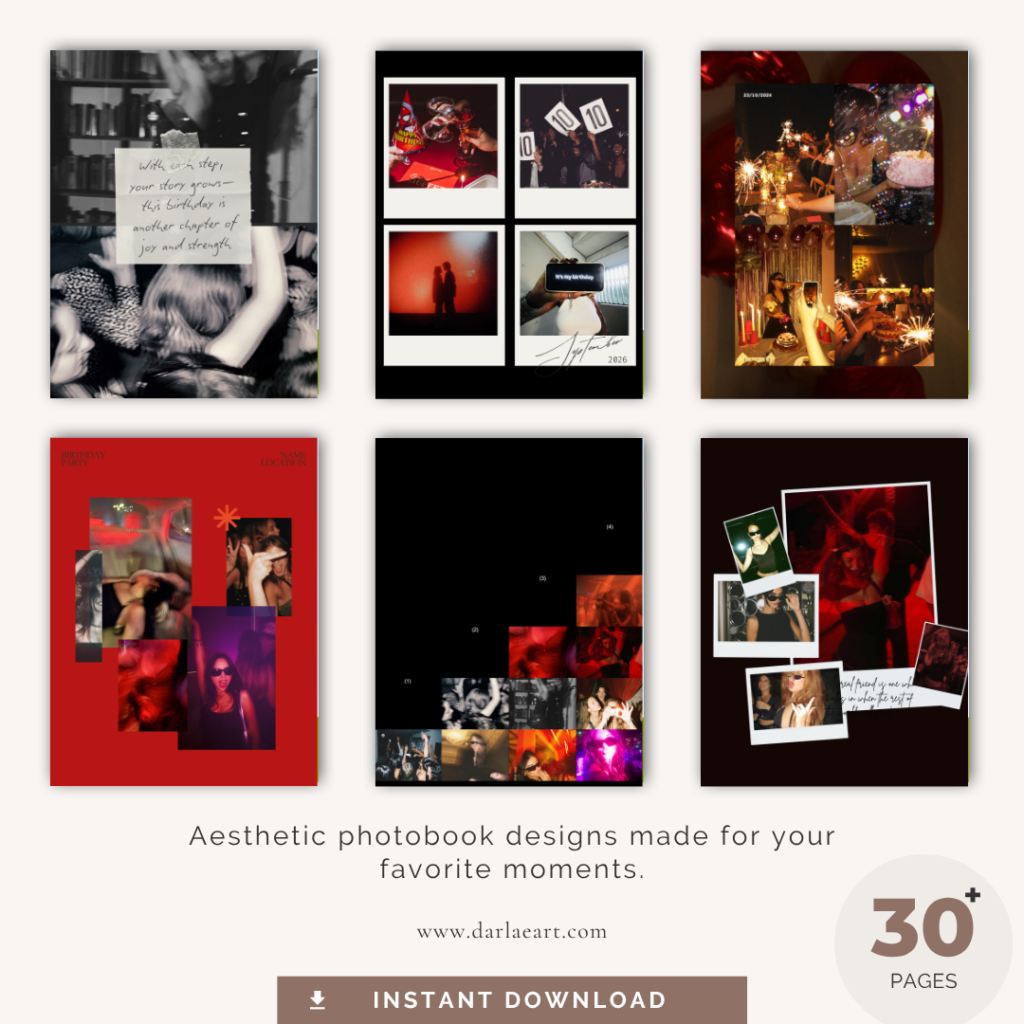
- Magazine Editorial — bold cover typography, collage-style spreads, pull-quote captions. This is the aesthetic Darlae’s templates are built around, and it photographs beautifully for milestone birthdays.
Pick one theme and stay consistent — mixing too many styles is what makes a photo book feel cluttered rather than curated.
How Many Pages and Photos Do You Actually Need?
A common hesitation is not knowing how much content is “enough.” As a rough guide:
- 32 pages (15 spreads) is a comfortable size for a 40th birthday book — enough to cover 4 decade-sections plus a few tribute or candid-collage spreads, without needing to hunt for filler content
- Plan for roughly 3–5 photos per spread in collage-style pages, or 1–2 for full-page posed portraits
- That works out to around 60–90 photos total — very achievable from phone camera rolls, social media, and a few scanned prints from childhood
If you’re short on early-childhood photos, lean more heavily into the last two decades and use captions to cover the gaps rather than forcing pages you don’t have images for.
Bringing It Together
Once you’ve settled on a theme and roughly how many photos you have, the design part is where most people stall out. The Aesthetic Birthday Photo Book template is built exactly around this magazine-editorial style — 32 pages, fully editable in Canva (no Canva Pro needed), with collage layouts ready for then-vs-now pairings, decade sections, and candid photo grids already structured in.
Rather than designing every spread from scratch, you drop your photos in, adjust captions per decade, and reorder spreads to match your own milestone story.